Surgical treatment of hernias

An anterior abdominal wall hernia is a disruption of the anatomical integrity of the tissues that requires surgical repair. At the K+31 Clinic, specialized specialists—herniology surgeons—treat this condition. Our goal is to restore the strength of the abdominal wall and return the patient to full physical activity without pain or limitations.

Best
specialists
Expert
equipment
Advanced diagnostic
treatment
Sign up
Fill out the entry form on the page and we will call you back
Sign up Позвонить
Download the application “Personal Account K+31”
Everything about your health in one click!
Subscribe to social networks K+31
To keep up to date with current offers and receive useful advice about your health.

Why is it important to see a hernia specialist in a timely manner?

A hernia is a defect in the muscular-tendinous layer through which internal organs protrude under intra-abdominal pressure. The structure of the connective tissue or excessive strain can lead to gradual widening of the hernial orifice.

Conservative treatments (bandages, exercises) are unable to correct this anatomical defect. Over time, the hernia increases in size, increasing the risk of strangulation—a critical condition requiring emergency intervention. Elective surgery at K+31 allows for avoiding complications and providing gentle, minimally invasive treatment.

Why is it important to see a hernia specialist in a timely manner?

Types of hernias and treatment options in K+31

The clinic's specialists select a treatment strategy based on the location, size of the defect, and the history of previous interventions. We treat all types of hernias:

  • Inguinal and femoral hernias. These are the most common type of hernia. We use techniques that preserve male reproductive function and ensure an aesthetically pleasing result without extensive incisions.
  • Umbilical and epigastric hernias (hernias of the linea alba). For defects larger than 2 cm, the use of a mesh implant is mandatory. This reliably strengthens weakened connective tissue and prevents hernia recurrence.
  • Postoperative and recurrent hernias. These occur in areas of scar tissue from previous surgeries or in cases of unsuccessful initial hernia treatment. We perform complex reconstructions, including component separation techniques, to restore natural abdominal muscle function even with large defects.
  • Lateral hernias and neuromuscular defects. A special category of hernias that occur after lumbar approaches (e.g., kidney surgery). We use proprietary techniques to eliminate the "sail" effect, restoring tone and proper anatomical contour to the lateral abdominal wall.
  • Sports hernias (Gilmore's hernia). Chronic groin pain in athletes caused by hidden weakness of the posterior wall of the inguinal canal. We perform expert imaging (MRI/ultrasound) and laparoscopic strengthening of the area to enable the athlete to return to training as quickly as possible.
  • Parastomal hernias. A highly specialized area for patients who have developed a hernia in the area of ​​an intestinal stoma. We use the internationally recognized Sugarbaker technique—the placement of a special mesh with an anti-adhesive coating that protects internal organs and restores quality of life. We also offer the Pauli extraperitoneal prosthetic repair, which is technically more challenging but effective in some complex cases.
  • Diastasis recti. This muscle separation (often after pregnancy) is corrected endoscopically. This allows us to restore a flat stomach and strengthen the abdominal wall through minimal incisions, avoiding the trauma of traditional abdominoplasty.

Treatment Methods: Technologies and Expert Choice

In modern herniology, the choice of technique depends not only on the size of the hernia but also on the patient's goals of maintaining quality of life. We differentiate approaches based on the method of implementation and the principle of tissue strengthening.

Traditional (open) hernioplasty

The surgery is performed through an incision in the hernia area. This method remains indispensable in the treatment of giant hernias, complex recurrences, or in cases where removal of excess soft tissue is necessary.

  • Strengthening principle: We use "tension-free" repair. Instead of simply tightening weakened tissue with sutures, the surgeon strengthens the abdominal wall with a mesh implant that bears the load. Properly performed endoscopic surgery can significantly reduce the recurrence rate.
  • Installation options: mesh placement between or under the muscles, rather than on the muscles, is effective. These options are preferable because the implant is protected by the muscular framework of the abdominal wall.

Minimally invasive (endoscopic) surgery

This is a priority for K+31. All procedures are performed through 3-4 small punctures (5-10 mm) under high-definition video camera control.

  • TAPP Method: The mesh is placed on the hernia defect from the abdominal side under the fascia and peritoneum, preventing adhesion of the viscera to the mesh.
  • IPOM Method: A special high-tech mesh with an anti-adhesion coating is also placed from the abdominal side, but directly on the peritoneum. Intra-abdominal pressure acts on the patient, pressing the implant against the hernia defect like an "internal patch."
  • eTEP / Sublay Method: A new approach in surgery, where the mesh is placed in the space between the muscles without entering the abdominal cavity. This allows the use of implants without special coatings, while maintaining all the advantages of laparoscopy.

Advantages of endoscopic surgery

Minimal risk of infection, no large scars, and the ability to return to active life within a few days. Furthermore, a video camera allows the surgeon to conduct an inspection and detect hidden defects that were not visible during an external examination.

Treatment and care of patients at K+31 are provided by hernia surgeons with extensive experience in abdominal surgery.

Our specialists are members of specialized hernia societies, which guarantees the use of current international treatment protocols.

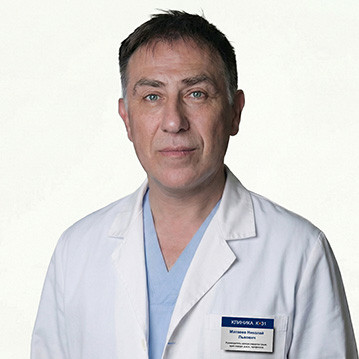
Matveev Nikolay Lvovich
Head of the Hernia Surgery Center, surgeon, Doctor of Medical Sciences, professor. A recognized expert in endoscopic surgery.

Treatment and care of patients at K+31 are provided by hernia surgeons with extensive experience in abdominal surgery.

Our specialists are members of specialized hernia societies, which guarantees the use of current international treatment protocols.

Armashov Vadim Petrovich
A surgeon with many years of experience in treating complex and recurrent hernias of the anterior abdominal wall.

General information

Treatment and Rehabilitation Stages

Surgery at K+31 is organized around the principles of rapid rehabilitation. Thanks to the minimally invasive nature of the procedures, most patients return to their normal routines as quickly as possible:

  1. Diagnostics: For complex hernias, we perform CT or MRI to assess muscle condition and plan surgery.
  2. Preparation: Individualized recommendations for weight management and lung preparation (smoking cessation) minimize risks during and after surgery.
  3. Surgery: The use of lightweight composite meshes and modern fixators makes the procedure short and safe.
  4. Activity: You will be able to get up and walk independently within 3-4 hours after surgery.
  5. Inpatient Care: Discharge usually occurs the next day. The patient can return to daily activities after 2-3 weeks. [The text appears to be incomplete and likely a mistranslation.] ...

Material Quality: Why We Choose the Best

The surgical outcome depends 50% on the characteristics of the mesh implant. We avoid heavy, fine-mesh meshes, which can deform over time or cause discomfort.

Implantation Standards at K+31:

  1. Biocompatibility: We use lightweight cast monofilament meshes (from leading global manufacturers: Bard, Medtronic, Ethicon). They are inert, cause minimal body reaction, and over time become a natural part of the abdominal wall.
  2. Composite Coatings: For IPOM surgeries, we use meshes with a special absorbable layer that prevents adhesions to internal organs.
  3. Non-fixation technologies: To minimize the risk of chronic pain, we strive to avoid the use of rigid titanium fixators (staplers). Instead, self-fixing mesh with micro-hooks or special adhesives are used.

Lateral Hernias and Neuromuscular Defects (Sail Effect)

Patients who have undergone open kidney, spine, or aortic surgery through a lumbar approach (lumbotomy) often experience flank protrusion. This occurs due to nerve damage and loss of muscle tone.

  • Problem: Traditional methods often fail to address this muscular "sail," and wearing a brace only worsens muscle weakness.
  • Solution K+31: We use proprietary endoscopic techniques. Through punctures, the surgeon creates space between the layers of abdominal muscles, reduces the hernia, and installs a large, dense mesh from the ribs to the ilium. This not only closes the defect, but also physically tightens and strengthens the "sail," improving the contours of the figure and, most importantly, reducing the risk of further bulging in the future.

"Sports Hernia" and Chronic Groin Pain

Chronic groin pain in athletes (football, hockey, tennis) is often associated with a so-called Gilmore's hernia. This is not a classic bulge that can be felt manually, but a hidden weakness in the posterior wall of the inguinal canal.

  • Diagnosis: Since the injury only manifests itself during explosive loads, we use expert ultrasound and MRI to visualize minor defects.
  • Treatment: For a speedy return to sports, we perform laparoscopic revision. The surgeon reinforces the inguinal-pubic area with mesh, eliminating the cause of the pain and protecting the tissue from further tears.

Answers to frequently asked questions from patients

What is a seroma and is it dangerous?

A seroma is a temporary accumulation of tissue fluid in the surgical area. It is the body's natural response to creating space for the mesh. In most cases, it resolves on its own within a few weeks and does not require intervention.

Why can't an incarcerated hernia be reduced?

Strangulation is the interruption of the blood supply to the organs within the hernial sac as a result of their compression within the hernial orifice. Self-reduction can result in necrotic (dead) tissue entering the abdomen, leading to peritonitis. If severe pain and tension develop in the hernia area, immediate surgical intervention is required.

Is it possible to do without a grid?

Worldwide experience shows that refusing mesh for hernias larger than 2 cm leads to recurrence in every second case. Mesh is not a "patch," but rather a stimulus for the formation of a strong, natural tissue layer that can withstand any pressure.

What to do if the hernia returns after surgery?

A recurrent hernia requires a special approach, as the tissue in this area has already changed and often contains remnants of old mesh. At the K+31 clinic, such surgeries are performed under strict monitoring. Our surgeons typically use an endoscopic approach from a "clean" area, free of scars. This allows for the most accurate placement of the new implant, restoring the integrity of the abdominal wall even in the most challenging cases.

Sign up for a consultation

Timely diagnosis allows for planned surgery with minimal recovery time. To determine the treatment plan and the necessary diagnostic procedures (ultrasound, CT, or MRI), an in-person consultation with a hernia surgeon is required. Schedule an appointment with surgeon K+31 to develop a personalized treatment plan.

Our doctors

Matveev Nikolay Lvovich
Experience 39 years
Make an appointment
Matveev
Nikolay Lvovich
Head of the hernia surgery center, surgeon, doctor of medical sciences, professor
Armashov Vadim Petrovich
Experience 25 years
Make an appointment
Armashov
Vadim Petrovich
Surgeon
All specialists
2GIS Award
2GIS Award

This award is given to clinics with the highest ratings according to user ratings, a large number of requests from this site, and in the absence of critical violations.

«Good place» according to Yandex

This award is given to clinics with the highest ratings according to user ratings. It means that the place is known, loved, and definitely worth visiting.

Our doctors are laureates of the ProDoctors Award

The ProDoctors portal collected 500 thousand reviews, compiled a rating of doctors based on them and awarded the best. We are proud that our doctors are among those awarded.

Make an appointment at a convenient time on the nearest date

Price

Reception
Price
Initial appointment (examination, consultation) with a leading surgeon
from 6 700 ₽
Primary appointment (examination, consultation) with a surgeon (vascular), Doctor of Medical Sciences
from 9 240 ₽
Surgery for giant incisional hernia
from 194 800 ₽
Surgical treatment of inguinal-femoral hernia using video endoscopic technologies
from 129 591 ₽
Laparoscopic repair of the anterior abdominal wall for hernias
from 150 500 ₽
Elimination of hiatal hernia using video endoscopic technologies
from 215 800 ₽

Other services

Abdominal surgery AV heart block Adrenal adenoma Arthroscopy of the knee joint Bariatric surgery Bariatrics Nott's disease (trigger finger) Inflammation of the salivary glands (sialadenitis) Home visit Rectal prolapse (prolapse of the rectum) Gonarthrosis (osteoarthrosis of the knee joint) Diagnosis and treatment of hernia of the white line of the abdomen Treatment of TMJ (temporomandibular joint) dysfunction Benign soft tissue neoplasms Gallstone disease (cholelithiasis) Knee replacement Shoulder impingement syndrome Interventional radiology Correction of the nasal septum Treatment of coronary heart disease (CHD) Compression fracture of the spine Consultation with a vascular surgeon Laparoscopic hysterectomy (removal of the uterus) Laparoscopic surgery Treatment of anal fissures Treatment of ovarian apoplexy (rupture) Treatment of Graves' disease (diffuse toxic goiter) Ingrown toenail removal Treatment of hidradenitis suppurativa under the arm Treatment of spinal hernia Treatment of diastasis recti Treatment of intestinal obstruction Treatment of dupuytren's contracture Morton's neuroma treatment Treatment of uterine prolapse Treatment of vaginal wall prolapse Treatment of felon Treatment of a broken finger Treatment of a humerus fracture Treatment of jaw fracture Treatment of femoral neck fracture Treatment of perforated gastric ulcer Лечение птоза верхнего века Treatment of heel spurs Treatment of trophic ulcers on the legs Treatment of endometrioid ovarian cysts Minimally invasive proctology Eye microsurgery Neurosurgery: what does a neurosurgeon treat? Emergency Surgical Care Circumcision General surgery Oncosurgery Gallbladder surgery Thyroid surgery Операция паховой грыжи Prostate adenoma removal surgery Surgery to remove veins for varicose veins Esophageal Hernia Removal Surgery Inguinal Hernia Surgery for Men Surgery for varicocele Surgery for a torn meniscus in the knee joint Carpal Tunnel Syndrome Surgery Whipple’s procedure Pancreatic necrosis (necrosis of the pancreas) Appointment with a proctologist in Moscow Surgeon's appointment (fee required) Radiofrequency denervation of the spine (RFD) Gastric resection is a surgery to reduce the stomach size for weight loss Septoplasty is a surgery to correct the nasal septum. Vascular surgery Spinal stenosis Stenosing atherosclerosis of the brachiocephalic arteries Stenting of the heart vessels (coronary arteries) Treatment of tonsillitis Puncture (biopsy) of the thyroid gland Thoracic surgery in Moscow Thoracoscopic surgery Pulmonary embolism Breast augmentation surgery with implants Removal of anal fringes Appendectomy Removal of atheroma Wart removal Hemorrhoid removal: a complete guide to surgeries and methods Removal of hygroma Gallbladder removal (cholecystectomy) Bartholin's gland cyst removal Breast cyst removal Removal of bunions on the feet (surgery) Lipoma (wen) removal Removal (extirpation) of the uterus - hysterectomy Removal of papillomas Laser removal of papillomas on the eyelid Removal of polyp in the uterus Umbilical hernia removal Umbilical hernia removal Mole removal Removal of a rectal fistula Thyroid nodule removal Removal of fibroadenoma of the mammary gland Removal of a boil Removal of Hallux Valgus (Bone on the Foot) Chalazion removal Removal of the thyroid gland (thyroidectomy) Installation and removal of a stent in the ureter Fibrocystic mastopathy of the mammary glands Surgical gynecology Surgical cardiology Surgical coloproctology Surgical mammology Surgical otolaryngology Surgical dentistry in Moscow Surgical traumatology Surgical urology Surgical treatment Fast track surgery Maxillofacial surgery Lump on the labia Gastric bypass Emergency hospitalization Endovascular surgery Hip replacement Epithelial coccygeal tract: treatment, removal surgery (excision) Barley on the eye
Make an appointment

Appointment to the doctor

Fill out the form, our managers will contact you within 15 minutes

Reviews

I went to the doctor with inflamed external hemorrhoids. During the examination, Beslan Khasenovich immediately suggested surgery, as there was a risk of further deterioration. The doctor clearly demonstrated the location of the hemorrhoid and the method of excision. Any doubts about his surgery being the right one for me vanished without a trace. During the surgery itself, the doctor asked how I was feeling and did his best to boost my spirits. Everything went well! Postoperatively, Beslan Khasenovich personally attended several dressing changes, each time explaining what to expect during the rehabilitation process. I definitely recommend it!
17.02.2026
Igor V.
A very attentive doctor. He answered all my questions, dispelled my doubts, and recommended a diagnostic plan.
02.02.2026
S. Alexandra Vladimirovna

About doctor:

Udin Oleg Ivanovich

I'd like to thank surgeon Samara M. for his exceptional professionalism and truly skilled hands. The removal of the sebaceous cyst behind my earlobe was quick, gentle, and completely calm. I was especially impressed by how simply and clearly he explained everything—my anxiety immediately disappeared, and I felt confident that everything would be fine. Thank you for your skill and compassion!
12.01.2026
Anatoly

About doctor:

Samara Maxim

The appointment went very well. The doctor bandaged the wound. I received the care I needed. The specialist was attentive and friendly.
12.01.2026
Olga

About doctor:

Samara Maxim

Good and responsive doctor!
29.12.2025
S. Irina Viktorovna

About doctor:

Melkonyan Lia Eduardovna

CIRCUMSTANCES AND ATTENTION OF A SPECIALIST
20.12.2025
T. Elena Mikhailovna

About doctor:

Ivanchik Inga Yakovlevna

A very good, responsive and competent doctor! ☀️
09.12.2025
S. Tatyana Vladimirovna

About doctor:

Melkonyan Lia Eduardovna

I was very pleased with the doctor’s professionalism!
03.12.2025
S. Maria Yuryevna

About doctor:

Melkonyan Lia Eduardovna

I consulted a surgeon in Samara. I had an abscess that was really bothering me. I specifically chose this doctor because I read that he was a specialist in the removal of tumors and purulent surgery with extensive experience. During the appointment, the doctor incised and cleaned the abscess. My main impression from the appointment was complete trust. The surgery was completely painless, although I was very nervous. I want to highlight the doctor's many strengths: his high level of professionalism, amazing precision in his work, and his attentive attitude towards the patient. He explained everything in detail, constantly inquired about my well-being, and maintained a calm and trusting atmosphere. I did not notice any drawbacks. The result exceeded expectations: the wound healed very quickly and without complications. The treatment was completely successful. A huge thank you to the doctor for his skillful hands, sensitivity, and the confidence he gives his patients!
01.12.2025
Anna

About doctor:

Samara Maxim

The doctor was very professional in treating this lesion. Compared to a similar operation I had in Nanjing in 2022, this time everything went better.
29.11.2025
L. Chengting
Почему К+31?
К + 31 — full-cycle multidisciplinary medical centers, including the possibility of providing medical services of European quality level.
К + 31 — are leading doctors and diagnostics using high-tech equipment from world manufacturers (Karl Storz, Olympus, Siemens, Toshiba, Bausch&Lomb, Technolas, Zeiss, Topcon).
К + 31 — is ethical. The staff of K+31 clinics maintain open relationships with patients and partners. An individual approach to each patient is the basis of our service standards.
К + 31 — is modernity. On call 24/7: call center operators will answer your questions at any time and book you an appointment with doctors. Contact us by phone, through the feedback form on the website and Max.

Our clinics

K+31 on Lobachevskogo

st. Lobachevskogo, 42/4

+7 499 999-31-31

Subway
1
11
Prospect Vernadsky Station
By a car
Lobachevsky, we pass the first barrier (security post of the City Clinical Hospital No. 31), turn right at the second barrier (security post K+31)
Parking pass
Opening hours
Mon-Fri: 08:00 – 21:00
Saturday: 09:00 – 19:00
Sunday: 09:00 – 18:00
K+31 West

Orshanskaya, 16/2; Ak. Pavlova, 22

74999993131

Subway
3
Molodezhnaya
By a car
Moving along Orshanskaya street, we turn to the barrier with the guard post K+31. You do not need to order a pass, they will open it for you
Opening hours
Mon-Fri: 08:00 – 21:00
Sat-Sun: 09:00 – 18:00
Didn't find the service you were looking for?

Экстренная помощь